
GET BACK TO LIVING WITH
SENVELGO® (velagliflozin oral solution)
Once-a-day and on your way
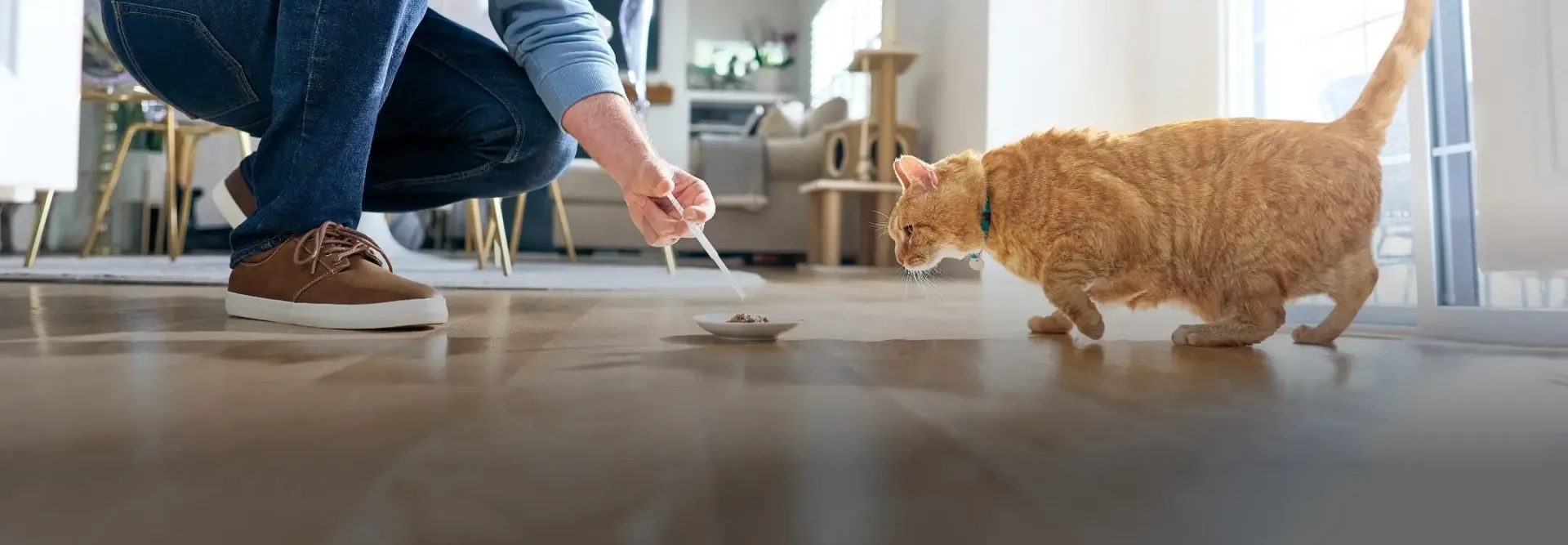
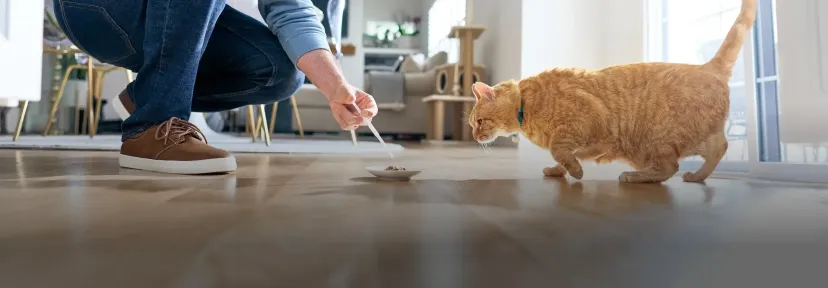
When diabetes changes your cat’s world, SENVELGO® (velagliflozin oral solution) can help bring it back into balance. With its once-daily, easy-to-give liquid dose,1 treatment fits seamlessly into your day, reducing the strain for both of you. Working to bring blood sugar levels under control and relieve the signs of diabetes, SENVELGO® helps you and your cat enjoy life together again.2,3
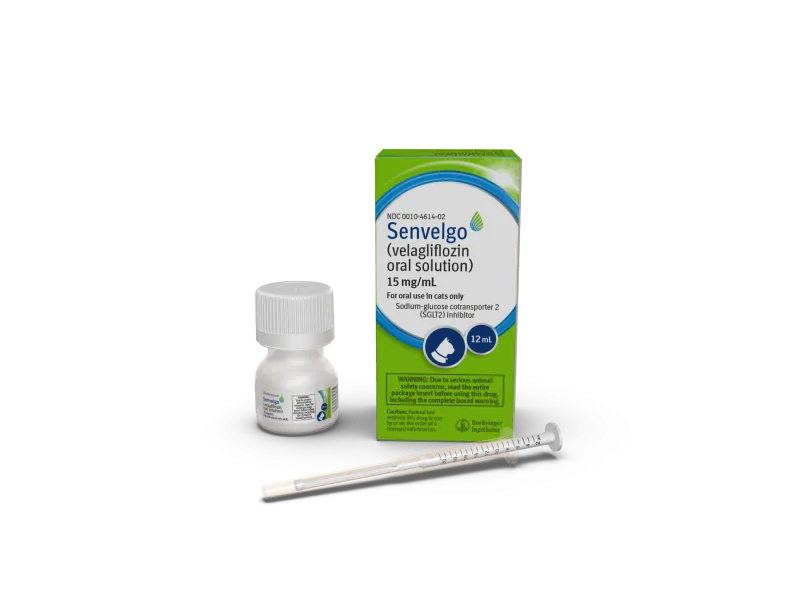
The benefits of SENVELGO®:
-
 Once-daily dosing1
-
 Convenient liquid formula
-
 Well-accepted by cats2
-
 Easy & accurate dosing
-
 No refrigeration required1
-
 Needle-free oral solution
SENVELGO®
(velagliflozin oral solution)
SENVELGO® (velagliflozin oral solution) vs traditional insulin therapy
SENVELGO® (velagliflozin oral solution) provides an alternative way to manage newly diagnosed diabetic cats. It works through the kidneys, helping remove excess sugar in the urine. Insulin, the long-standing standard treatment, helps to lower blood sugar levels in cats with diabetes.
Both treatments are effective, but SENVELGO® offers once-daily oral dosing, while insulin requires twice-daily injections, making management with SENVELGO® easier for many cats and their owners.
Is SENVELGO® right for every cat?
Your veterinarian will help evaluate if SENVELGO® is right for your cat. After your cat starts treatment, monitoring will be a team effort between you and your veterinary healthcare team.
Follow your vet's advice and keep an eye on your cat's behavior to help improve the disease management experience.
Dosage and Administration
SENVELGO® should be given orally, once-daily at the dosage recommended by your veterinarian based on the cat's body weight. See the full prescribing information for additional details.
How Do I Give SENVELGO® Oral Solution?
-
Image

Push down and turn cap to open bottle, then attach the dosing syringe to the plug-in adapter of the bottle.
-
Image

Turn the bottle upside down. Pull the plunger back until you reach the dosage prescribed by your vet. The syringe is calibrated in pounds of cat weight, so accurate dosing is accomplished by matching the cat’s body weight with the dose on the syringe.
-
Image

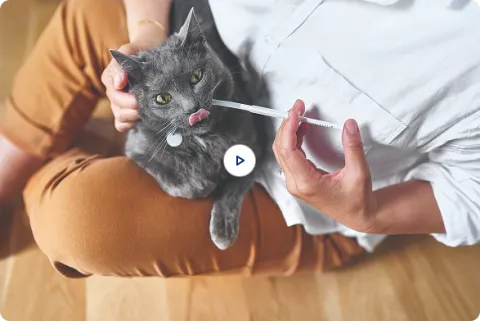
Separate the dosing syringe from the bottle, then push the plunger to empty the contents of the syringe directly into the cat’s mouth OR apply to a small amount of wet food.
-
Image

If needed, clean the syringe with a clean, dry cloth. Give SENVELGO® oral solution at approximately the same time each day.
Learn the simple steps to administer
Treatment FAQs
How fast does SENVELGO® oral solution work?
SENVELGO® oral solution works fast, making an impact on your cat’s diabetes in as soon as 7 days.3
Can I use SENVELGO® oral solution in place of insulin?
Your veterinarian will determine if SENVELGO® oral solution is an appropriate alternative to insulin. SENVELGO® is not to be used on cats previously treated with insulin.
Can SENVELGO® oral solution be used in combination with insulin?
The safety and efficacy of a combined treatment with insulin or other blood glucose–lowering treatments and SENVELGO® oral solution in cats has not been investigated. Combined treatment is not recommended.1
Is SENVELGO® oral solution easy to give and accepted by cats?
SENVELGO® oral solution is easy to give and is well-accepted by most cats.2 SENVELGO® should be given directly into your cat’s mouth with the provided dosing syringe or placed on a small amount of wet food your cat will eat completely (approximately 1 to 3 teaspoons of food). SENVELGO® oral solution eliminates the need for needles, twice-daily injections, and complex monitoring in most diabetic cats.
How do I store SENVELGO® oral solution?
SENVELGO® oral solution is easy to store and doesn’t require refrigeration. One bottle provides the convenience of 3 months treatment* in a single, 30 mL bottle and is good for up to 6 months after opening.1
*Based on average cat weight of 11 lbs
What should I do if my cat gets more than the prescribed dose?
If you see any side effects, contact your veterinarian immediately. If you don’t see any side effects, return to administering your cat’s prescribed dose the following day.
What should I do if my cat gets less than the prescribed dose or I miss a dose?
If your cat gets less than the prescribed dose, return to administering your cat’s prescribed dose the following day. If you miss administering a dose, give it as soon as possible on the same day.
What are the potential side effects of SENVELGO® oral solution?
Like all medications, SENVELGO® (velagliflozin oral solution) can cause side effects in some cats. The most commonly reported include diarrhea or loose stools, vomiting, weight loss (especially in the first week of treatment), increased thirst, and increased urination.
In rare cases, more serious issues such as diabetic ketoacidosis (DKA) have been reported, particularly soon after starting treatment.
If your cat shows signs like loss of appetite, vomiting, diarrhea, unusual tiredness, or weakness, stop giving SENVELGO® (velagliflozin oral solution) and contact your vet immediately.
Important Safety Information
SENVELGO® (velagliflozin oral solution) is indicated to improve glycemic control in otherwise healthy cats with diabetes mellitus not previously treated with insulin.
Before using this product, it is important to read the entire product insert, including the boxed warning.
Cats treated with SENVELGO® may be at an increased risk of diabetic ketoacidosis or euglycemic diabetic ketoacidosis, both of which may result in death.
Development of these conditions should be treated promptly, including insulin administration and discontinuation of SENVELGO®.
Do not use SENVELGO® in cats with diabetes mellitus who have previously been treated with insulin, who are receiving insulin, or in cats with insulin-dependent diabetes mellitus.
The use of SENVELGO® in cats with insulin-dependent diabetes mellitus, or the withdrawal of insulin and initiation of SENVELGO®, is associated with an increased risk of diabetic ketoacidosis or euglycemic diabetic ketoacidosis and death.
Sudden onset of hyporexia/anorexia, lethargy, dehydration, or weight loss in cats receiving SENVELGO® should prompt immediate discontinuation of SENVELGO® and assessment for diabetic ketoacidosis, regardless of blood glucose level.
SENVELGO® should not be initiated in cats with ketonuria, ketonemia, pancreatitis, anorexia, dehydration, or lethargy at the time of diagnosis of diabetes mellitus, as it may indicate the presence of other concurrent disease and increase the risk of diabetic ketoacidosis.
Keep SENVELGO® in a secure location out of reach of children, dogs, cats, and other animals to avoid accidental ingestion or overdose.
For more information, please see full prescribing information.